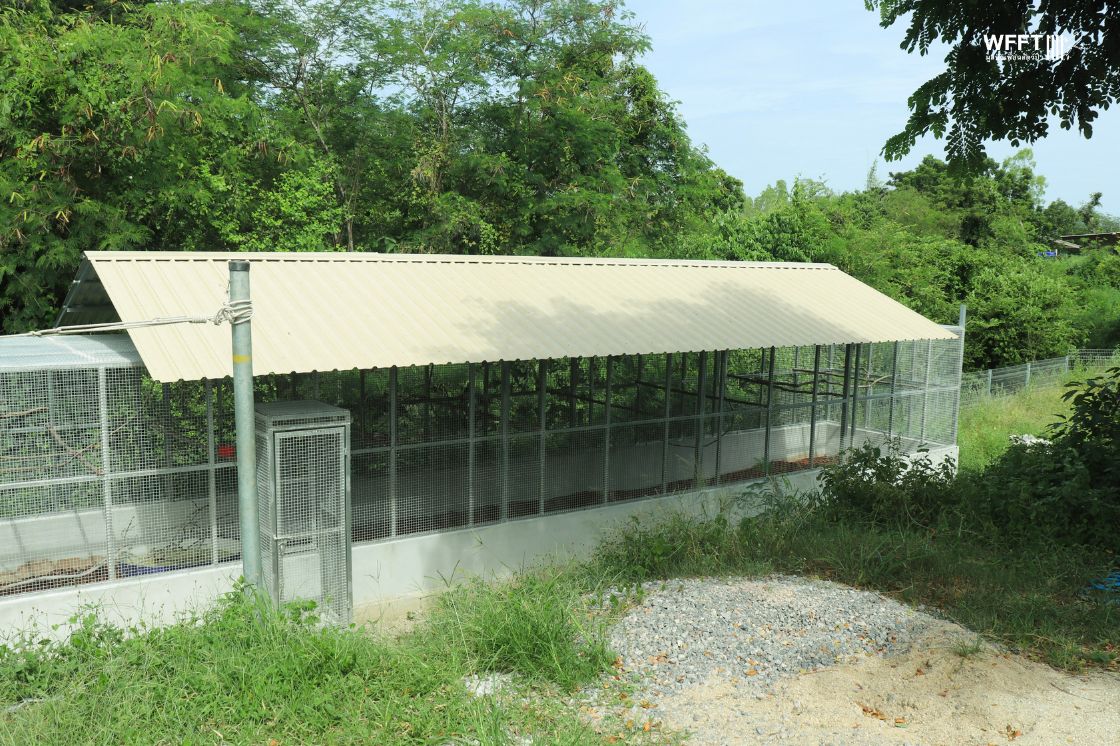
New wildlife rehabilitation enclosures, providing vital care and recovery space for injured, sick and orphaned wildlife.
A new species at WFFT
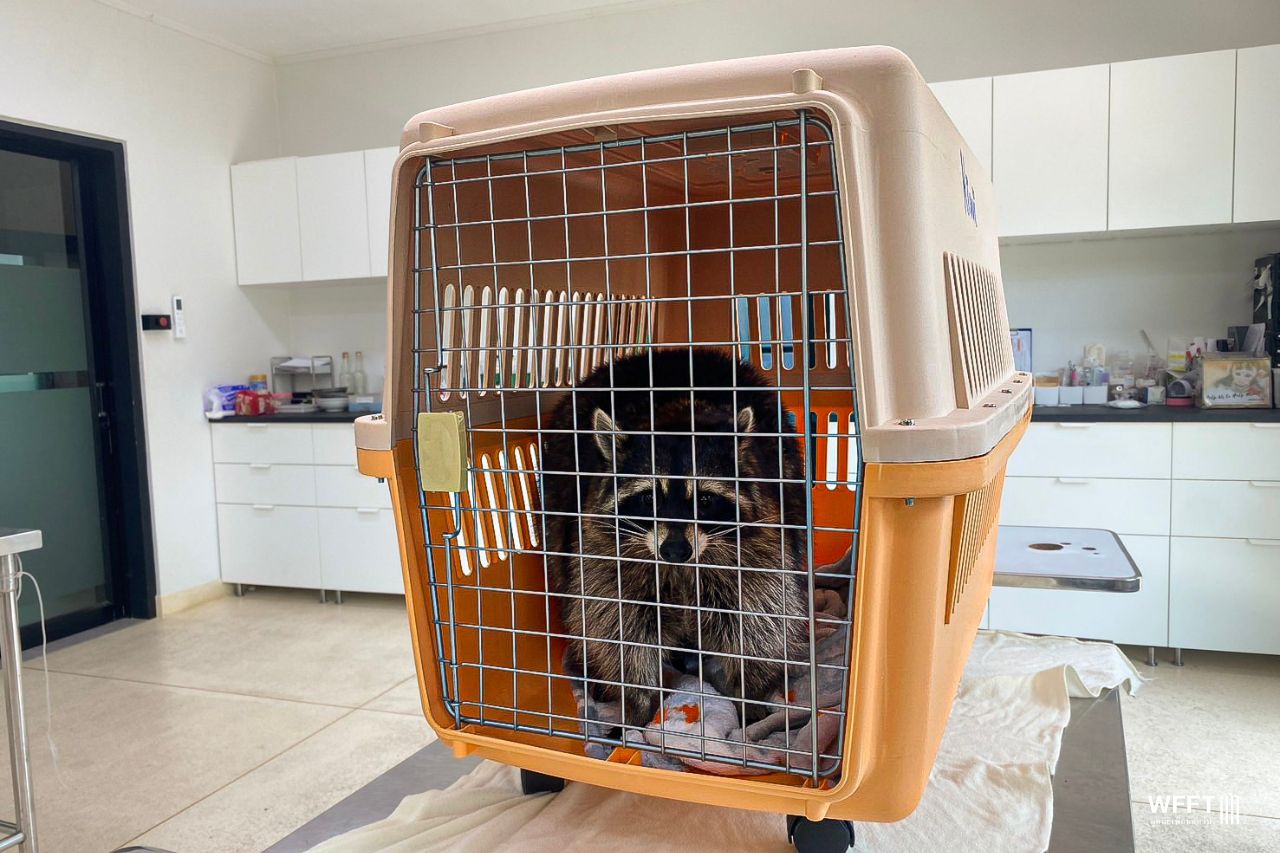
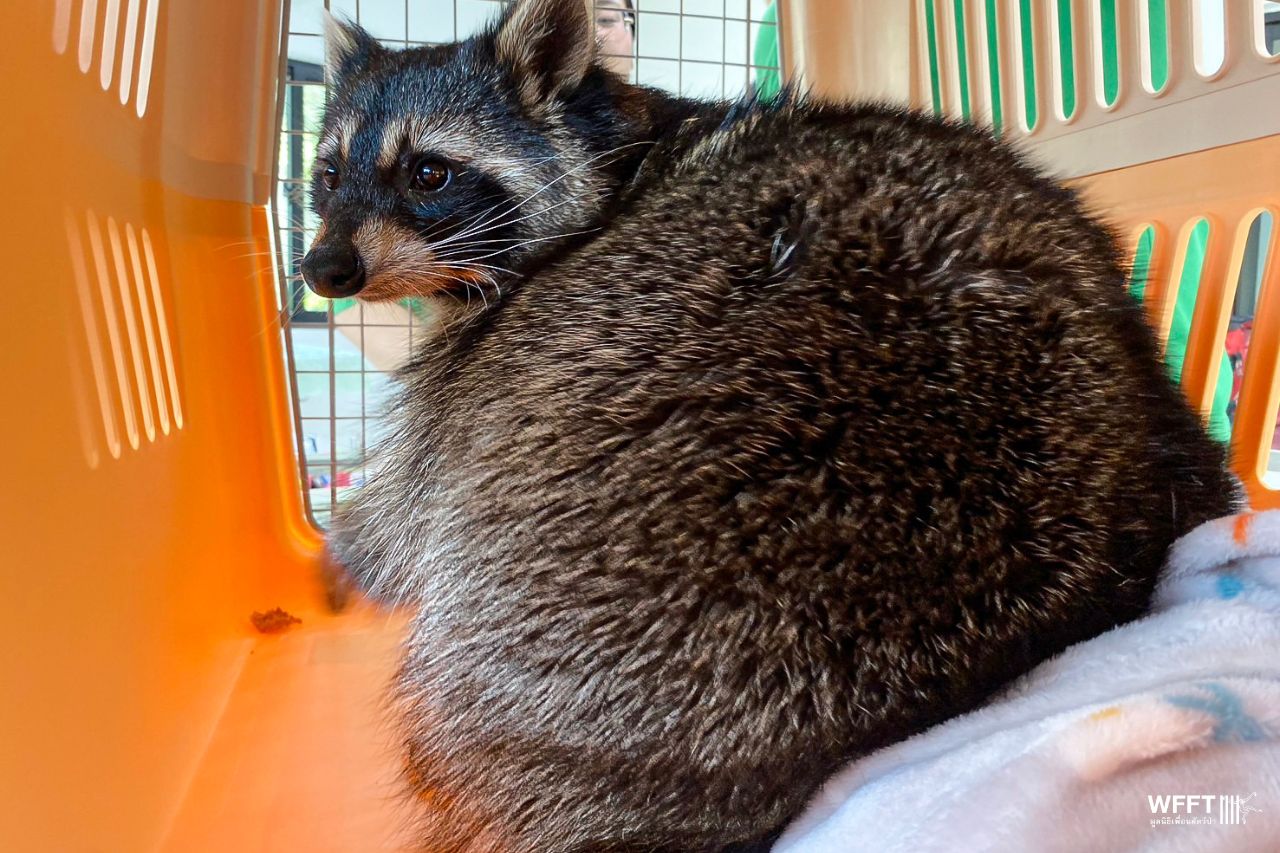
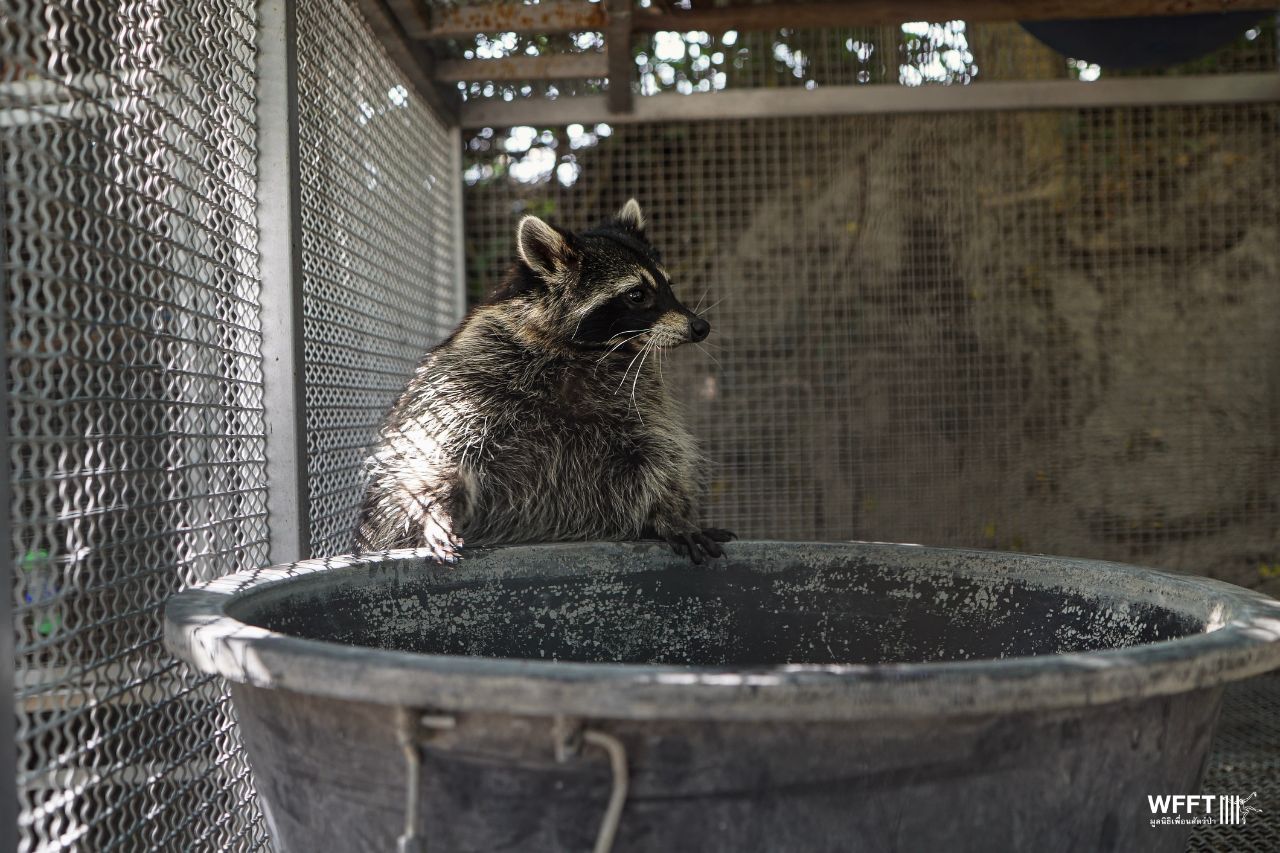
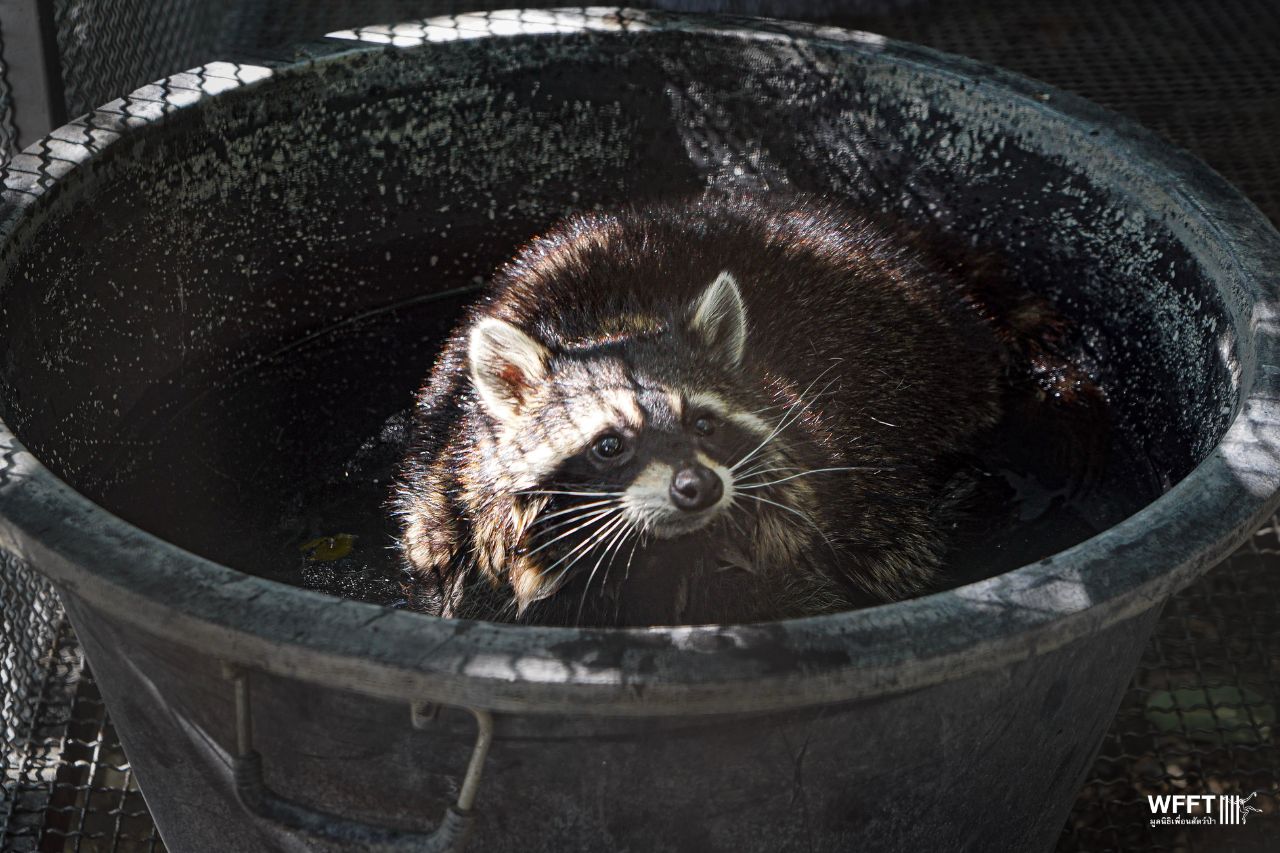
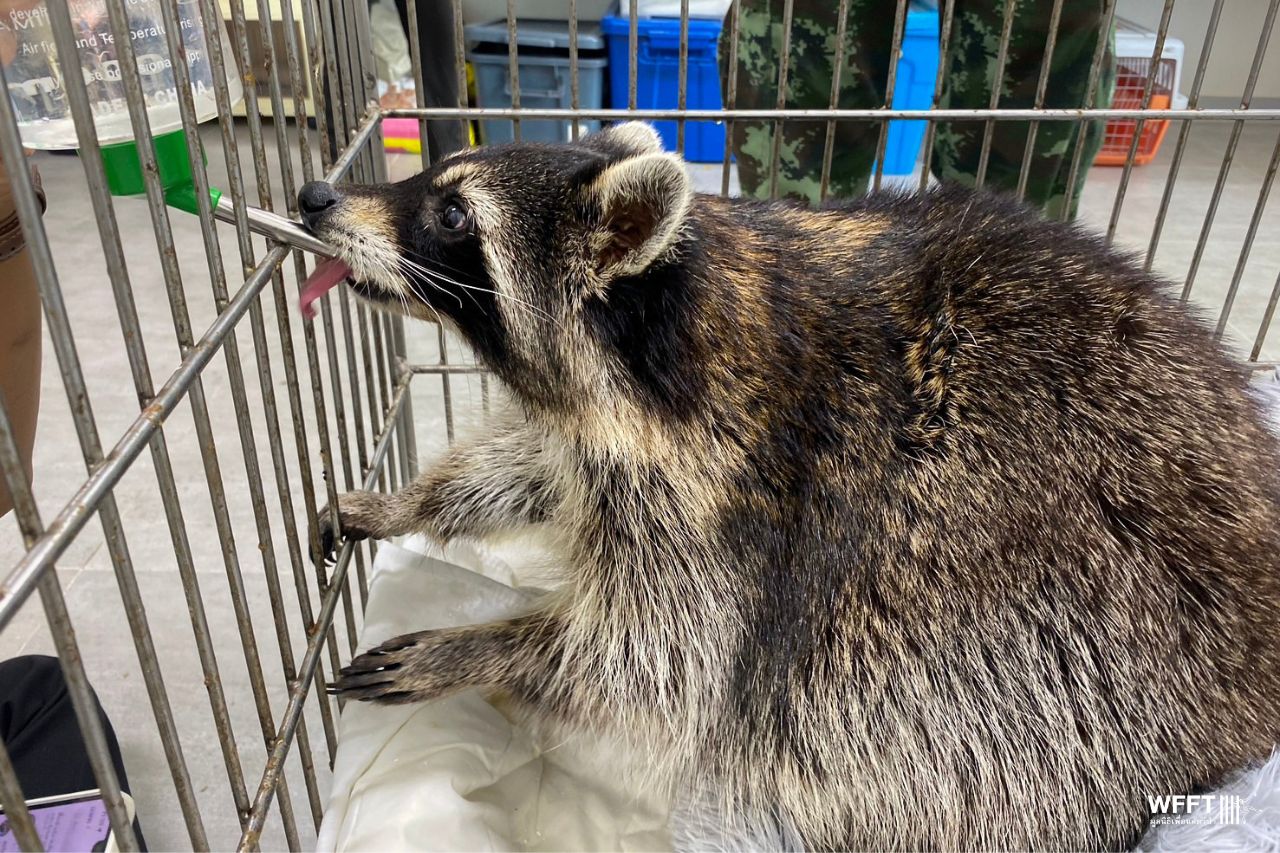
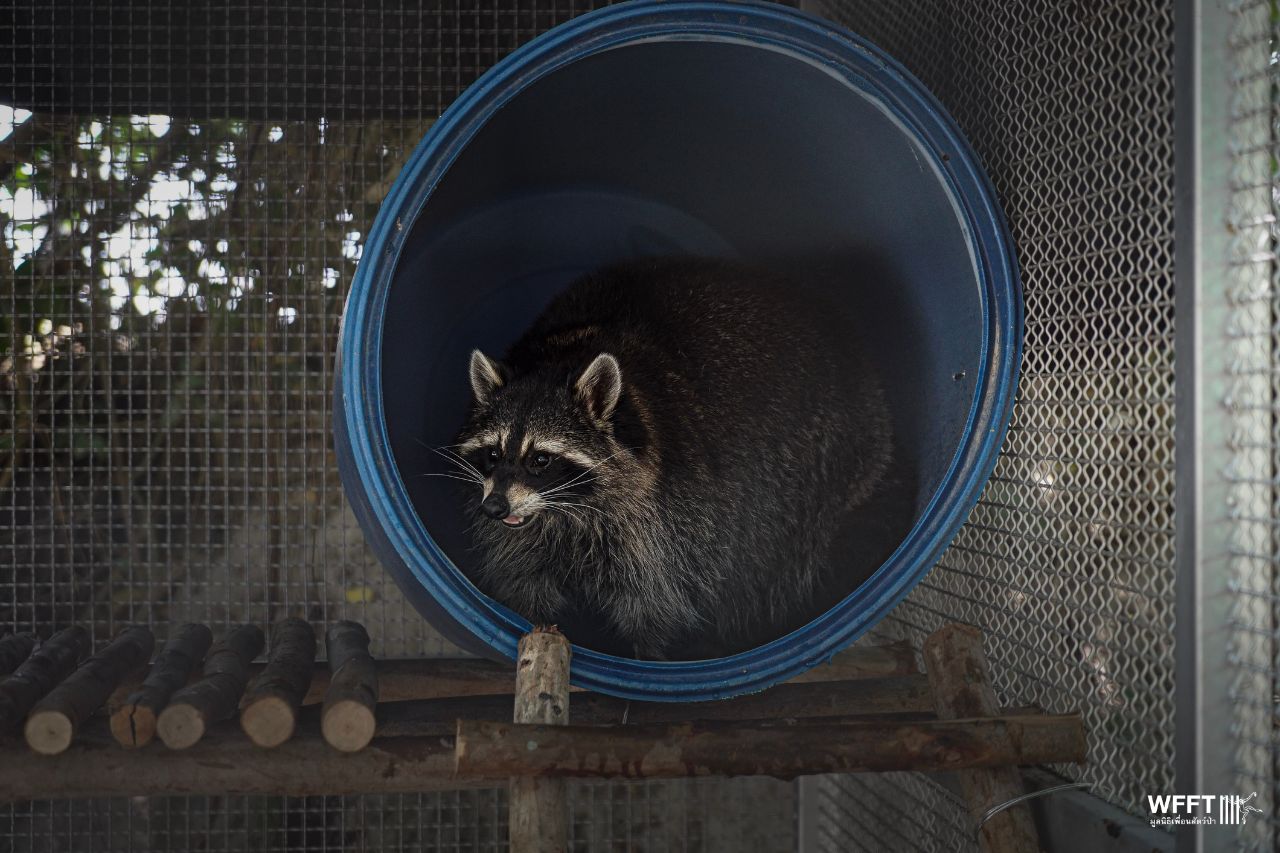
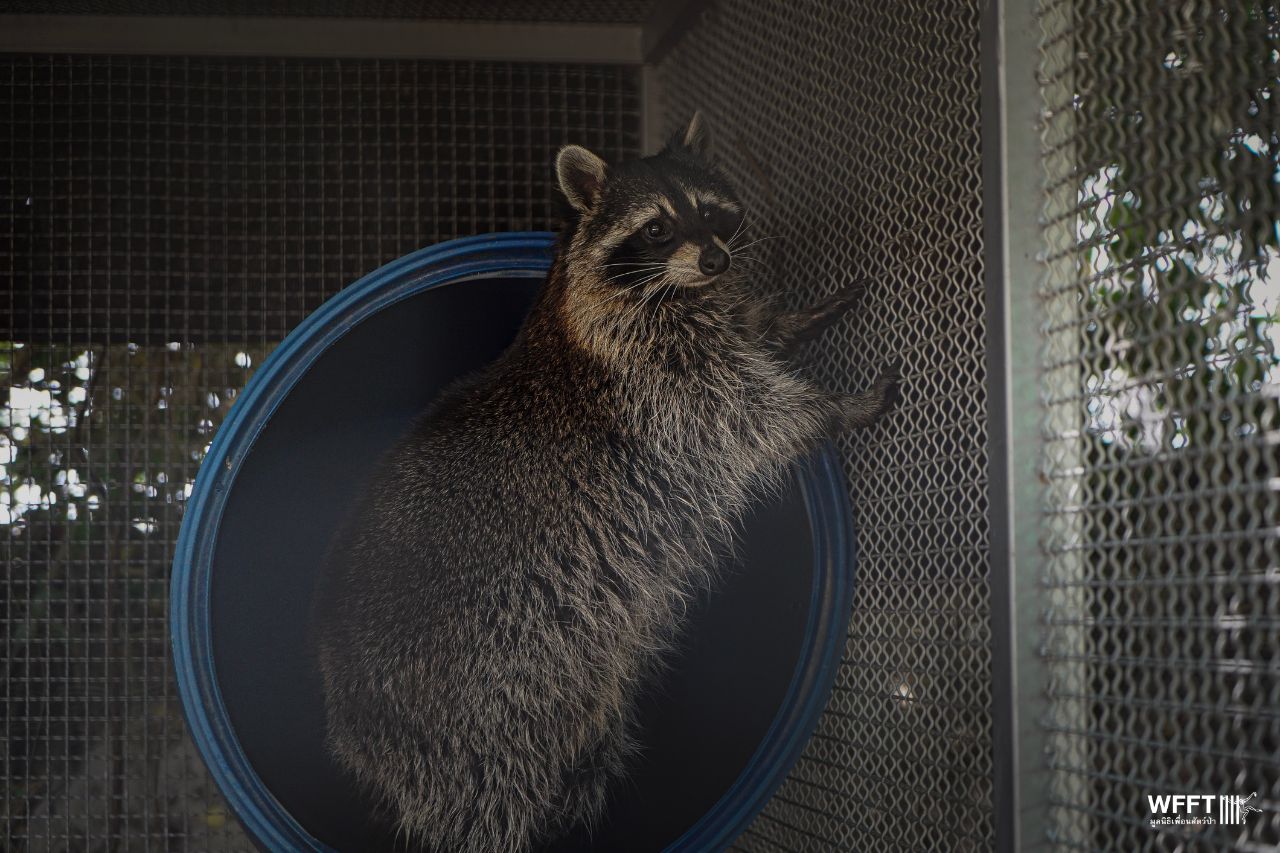
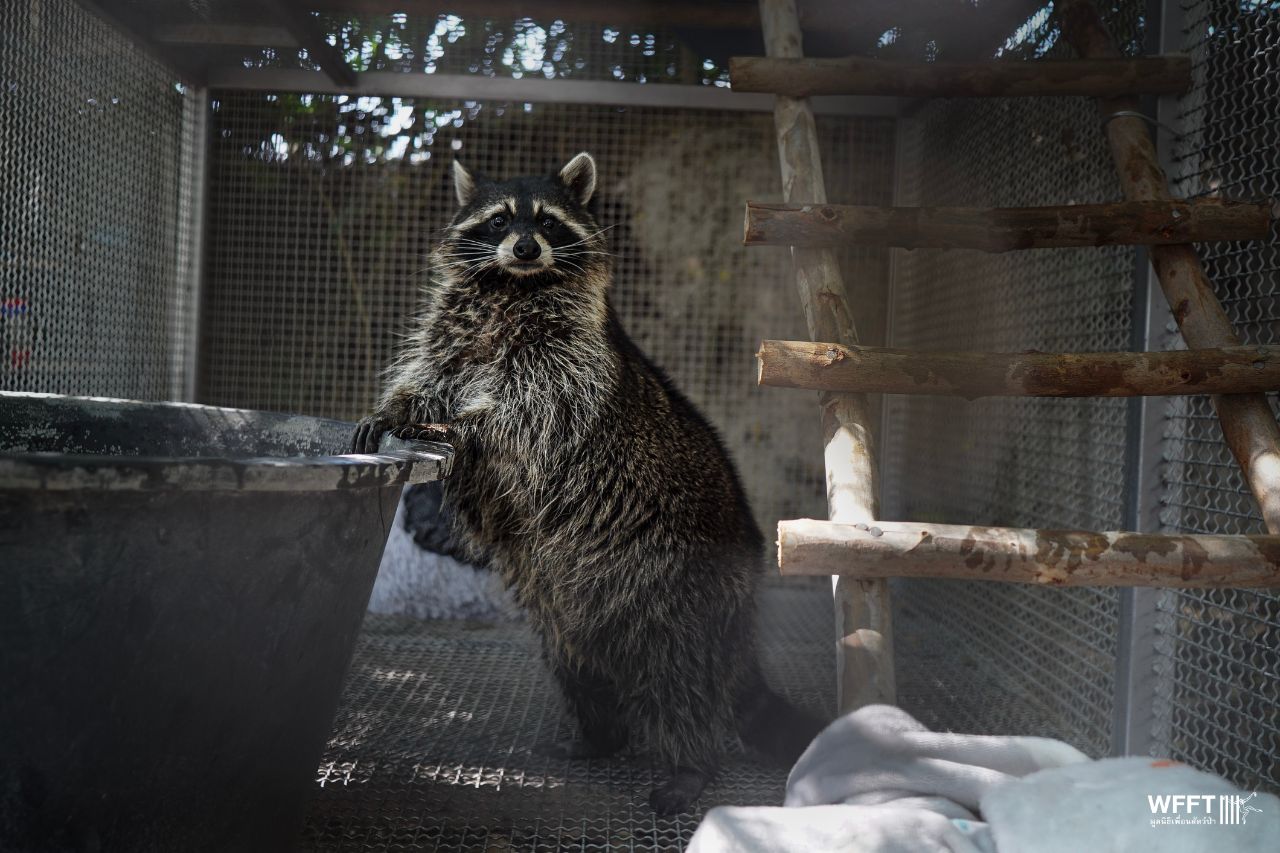
Introducing Kiwi the Raccoon
Kiwi was purchased from a market in Bangkok as a youngster. Her owners tried very hard to care for her, but as she grew older, she became increasingly destructive and aggressive, to the point where they could no longer keep her. Sadly, this is the reality of keeping a wild animal as a pet.
The exotic pet trade is a global industry built on the suffering of wildlife. Wild animals are bred, traded and sold purely for profit, often with little-to-no regard for their welfare or long-term future. Many are kept in cramped cages, transported long distances in stressful conditions, separated from their mothers far too young, and denied the ability to express natural behaviours. Many do not survive the journey from breeder or trafficker to buyer.
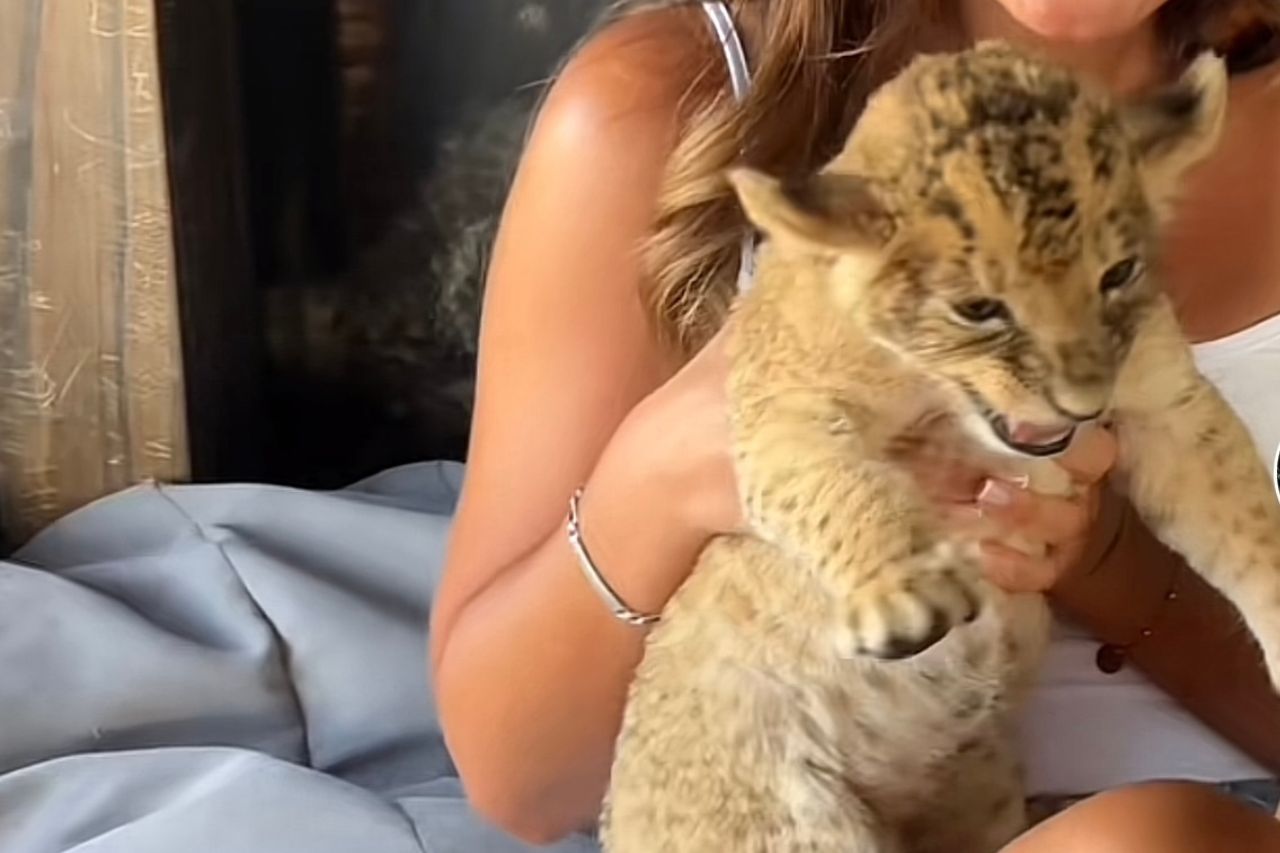
In recent years, social media has played a major role in normalising the exotic pet trade. Viral videos showing raccoons, monkeys, otters and other wild animals behaving “cute” around humans can make ownership seem harmless or even desirable. What those videos rarely show is the reality behind the scenes – stressed animals, unsuitable living conditions, injuries caused by poor care, and owners struggling to manage animals that were never meant to live in captivity.
Wild animals are not domesticated pets. They have highly specialised needs that cannot be met in a household environment. As they mature, many become destructive, aggressive, territorial or psychologically distressed. Owners are often unprepared for the level of care required, and many exotic pets are eventually abandoned, neglected, rehomed repeatedly, or surrendered to rescue centres once they become too difficult to handle.
Raccoons belong in the forests and wild habitats of North America – not in homes or markets in Thailand.
We understand it can be upsetting to see exotic animals for sale in markets and pet shops, and many people purchase them believing they are helping. However, every purchase creates demand for more animals to be bred, captured and sold. That animal will be replaced. As long as people continue buying wild animals as pets, the cycle of suffering continues.
At WFFT, we believe wildlife belongs in the wild.
Kiwi is very friendly and has absolutely no fear of humans – a reminder of just how deeply the exotic pet trade can alter an animal’s natural behaviour. We have began building her a suitable habitat at WFFT, where she can finally have the safe and enriched environment she deserves.
Related Posts