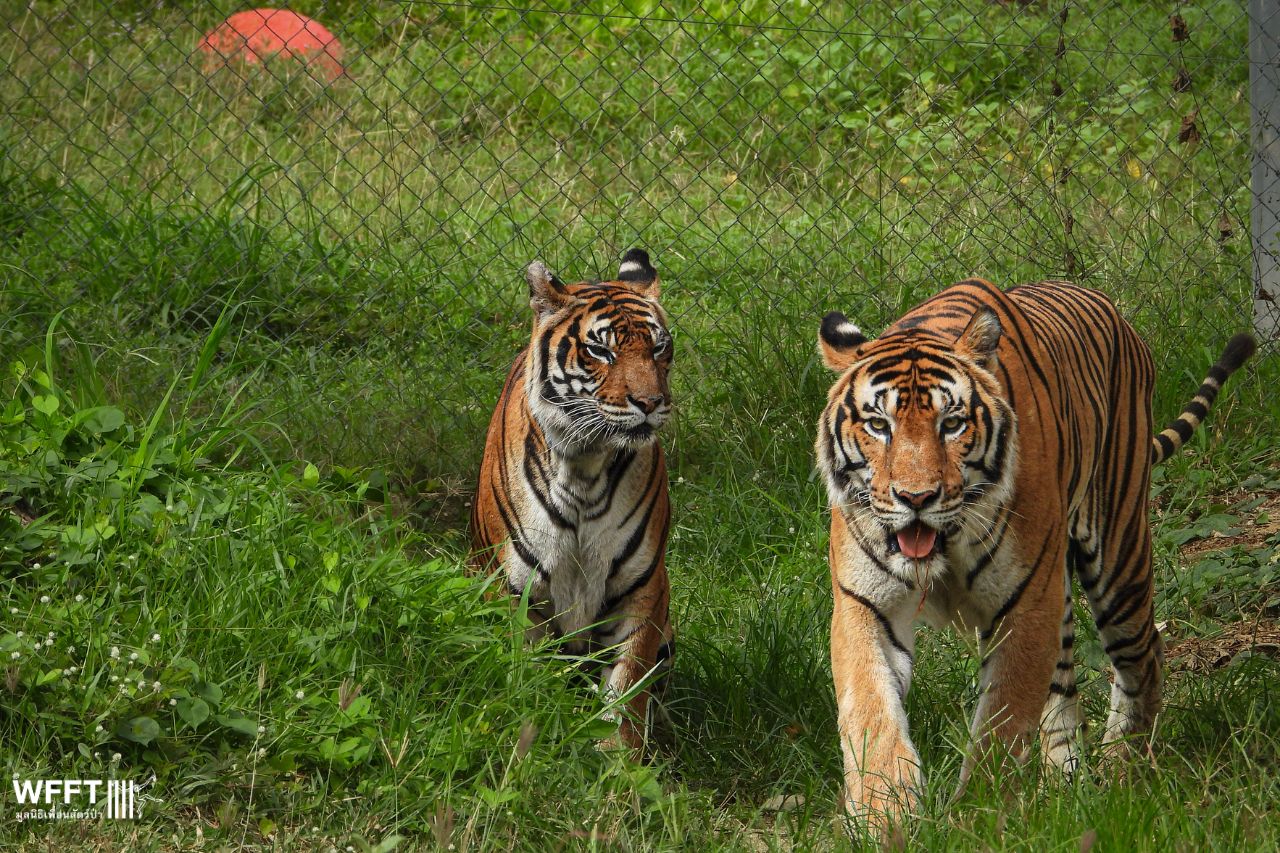
After more than a year of slowly getting to know each other, we are thrilled to announce these rescued tigers have finally moved in together.
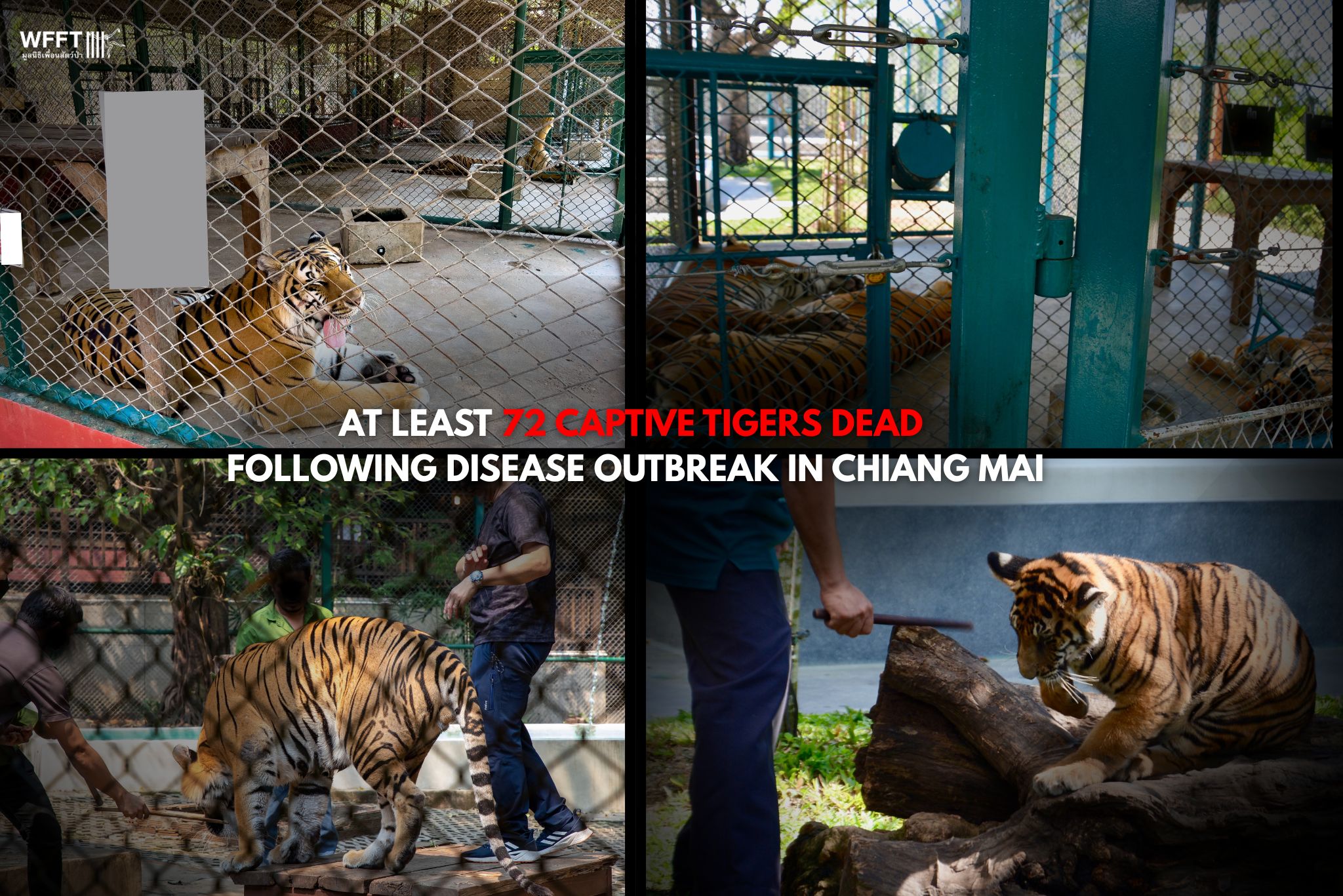
WFFT Statement – At Least 72 Captive Tigers Dead Following Disease Outbreak in Chiang Mai
A serious disease outbreak has reportedly killed at least 72 captive tigers at two popular tourist attractions in Chiang Mai in northern Thailand, raising urgent concerns about wildlife welfare, biosecurity, and the risks inherent in keeping large carnivores in intensive captive settings.
According to the official press release by authorities, at least 72 tigers died in February after contracting canine distemper virus – a highly contagious disease commonly carried by dogs. Veterinary authorities also identified secondary infections that worsened the animals’ condition.
WFFT believes these tigers will have been vaccinated against such a common disease, given that this is a cheap and effective way of protecting them from a disease with very high mortality.
The outbreak began in early February, with dozens of tigers quickly showing symptoms. Officials have since disinfected enclosures and prepared vaccinations for surviving animals, while the facilities have been temporarily closed to visitors.
The owner of the two affected tiger zoos reportedly operates six tiger facilities in total, which together housed nearly 400 individual tigers prior to this outbreak – an exceptionally large concentration of captive big cats that further heightens concerns about welfare standards, disease management, and oversight.
This tragedy highlights the extreme vulnerability of captive wildlife facilities to infectious disease – especially where animals are kept in close proximity and exposed to domestic animals or contaminated environments.
Captive tiger venues that allow close human interaction remain controversial worldwide. Critics argue that such operations prioritise entertainment over animal welfare and conservation, while outbreaks like this demonstrate the potentially catastrophic consequences when disease enters a confined population.
A canine distemper vaccine costs only a few hundred baht and requires annual administration. The facilities where these tigers died reportedly charge around 1,000 THB for tourists to interact with and have photos taken with a single tiger – with each animal used repeatedly throughout the day. When such substantial income is generated from each tiger, serious questions must be asked: why were these animals not routinely vaccinated against a well-known, preventable disease? And why were they not housed in conditions where the likelihood of disease transmission was minimised?
Under the Convention on International Trade in Endangered Species of Wild Fauna and Flora (CITES), tiger range states and other signatory nations have been urged to restrict the breeding of tigers in captivity and to ensure that captive populations are not used for commercial trade in parts and derivatives. CITES decisions call for countries to phase out facilities that breed tigers for trade or tourism, maintain strict controls over existing animals, and prevent captive tigers from entering illegal markets. These measures were introduced because large captive populations create opportunities for laundering tiger parts into the illegal wildlife trade, undermining global conservation efforts.
Thailand still has approximately 1,500 captive tigers housed across around 60 locations. Many of these animals are kept in poor conditions, bred for tourism, and some are believed to enter the illegal wildlife trade.
WFFT is deeply concerned by reports of this mass mortality event and emphasises the urgent need for stronger regulation, strict biosecurity measures, and a transition away from exploitative wildlife tourism.
Wild animals do not belong in entertainment venues.
They belong in the wild – or, when that is no longer possible, in genuine sanctuaries that prioritise their welfare above profit.
Related Posts